Comprehensive Guide: PCOD vs PCOS, Symptoms, Essential Hormone Tests, and the BIOCHEM360 Package
Posted on February 28, 2026 by Medical Team
• 7 min read
Jaipur
Biochem
Guide
Home Collection
PCOD
PCOS
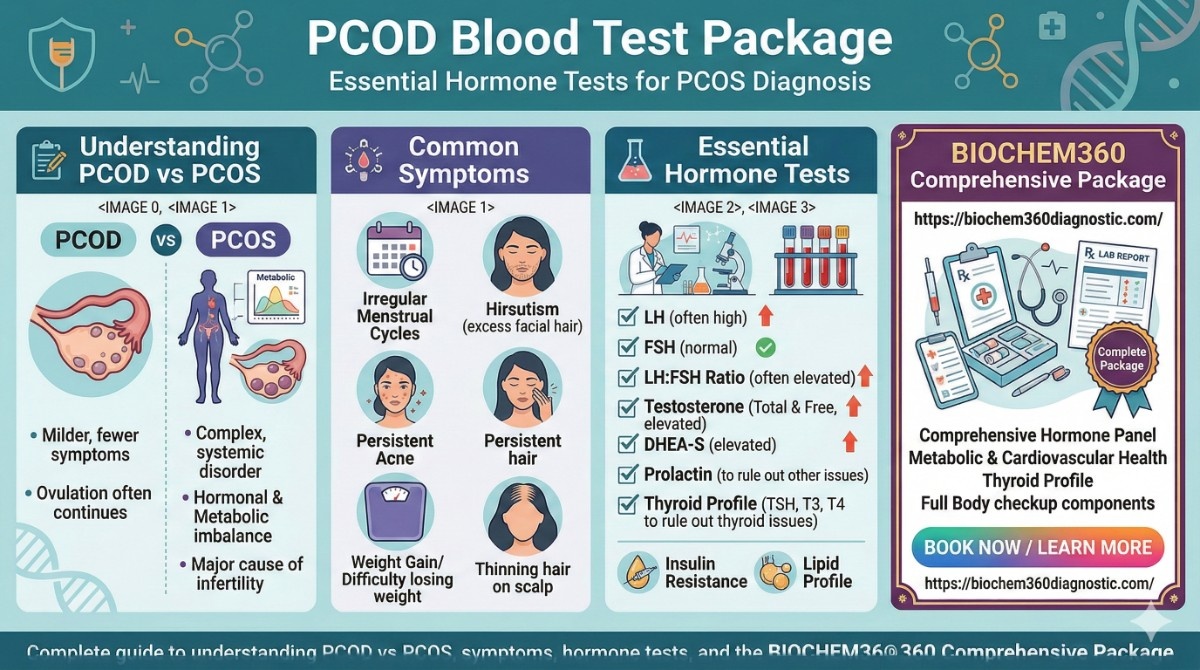
Understanding the distinction between PCOD and PCOS, recognizing their symptoms, and knowing which hormone tests are essential are the first steps toward an accurate diagnosis and effective management. This guide provides a clear, comprehensive overview and introduces the BIOCHEM360 Comprehensive Package designed to aid in this process
PCOD vs PCOS: What's the Difference?
Most searched question: Are PCOD and PCOS the same?
While often used interchangeably, there are subtle differences:
Copy
| Feature | PCOD (Polycystic Ovarian Disease) | PCOS (Polycystic Ovary Syndrome) |
|---|---|---|
| Severity | Less severe, manageable with lifestyle | More severe, metabolic disorder |
| Cysts | Immature eggs cause cysts | Hormonal imbalance prevents egg release |
| Fertility | Usually not affected long-term | Higher risk of infertility |
| Hormonal Impact | Milder hormonal fluctuations | Significant androgen (male hormone) excess |
| Reversibility | Often reversible with diet/exercise | Requires long-term management |
In India, doctors commonly use "PCOD" while Western medicine prefers "PCOS"—but both refer to similar ovarian dysfunction. For this guide, we'll use both terms as they appear in medical literature.
What Causes PCOD/PCOS?
Root causes include:
- Insulin Resistance (70% of cases)– Body can't use insulin effectively, leading to high blood sugar and increased androgen production
- Hormonal Imbalance – Elevated LH (Luteinizing Hormone) compared to FSH (Follicle Stimulating Hormone). Studies show 79% of PCOS patients have LH:FSH ratio >2
- Genetics – Family history increases risk by 30-40%
- Inflammation – Low-grade inflammation linked to androgen excess
- Lifestyle Factors – Obesity, sedentary lifestyle, poor diet exacerbate symptoms
12 Common PCOD Symptoms Women Search For
Early warning signs to watch for:
Menstrual Irregularities
- ✅ Irregular periods (cycles >35 days or <21 days)
- ✅ Missed periods (amenorrhea) for 3+ months
- ✅ Heavy bleeding (menorrhagia) when periods do occur
- ✅ Spotting between periods
Physical Symptoms
- ✅ Weight gain (especially around abdomen) – Most searched symptom
- ✅ Excessive facial/body hair (hirsutism) – Due to high androgens
- ✅ Acne and oily skin – Particularly along jawline and chin
- ✅ Hair thinning on scalp (male-pattern baldness)
- ✅ Dark skin patches – Acanthosis nigricans (neck, armpits, groin)
Metabolic & Other Signs
- ✅ Fatigue and low energy
- ✅ Mood swings, anxiety, depression
- ✅ Difficulty conceiving (infertility due to anovulation)
- ✅ Cravings for sweets/carbs
⚠️ When to see a doctor: If you have 3+ symptoms or missed periods for 2+ cycles, book the PCOD Comprehensive Package immediately.
Why Blood Tests Are Critical for PCOD Diagnosis
Self-diagnosis is risky. Many symptoms overlap with thyroid disorders, Cushing's syndrome, or simple hormonal fluctuations. Blood tests provide objective data for accurate diagnosis and treatment planning.
What the BIOCHEM360 PCOD Package Includes:
The PCOD Comprehensive Package (₹2,800 - 53% off) covers 11 essential tests across four categories :
1. Reproductive Hormones (The Core Panel)
Copy
| Test | Normal Range | What It Detects |
|---|---|---|
| LH (Luteinizing Hormone) | 2-15 IU/L (follicular phase) | Triggers ovulation; high levels indicate PCOS |
| FSH (Follicle Stimulating Hormone) | 3-20 IU/L | Stimulates egg development |
| LH:FSH Ratio | <2:1 normal; >2:1 suggests PCOS | Key diagnostic marker |
| Prolactin | 4-23 ng/mL | Rules out prolactinoma (tumor causing similar symptoms) |
| Estradiol (E2) | Varies by cycle phase | Estrogen levels assessment |
2. Androgen (Male Hormone) Panel
Copy
| Test | Purpose |
|---|---|
| Total Testosterone | Elevated in 70-80% of PCOS cases |
| DHEAS | Adrenal androgen marker |
| Free Androgen Index | Active testosterone calculation |
3. Metabolic & Insulin Resistance Markers
Copy
| Test | Why It Matters |
|---|---|
| Fasting Insulin | Detects insulin resistance early |
| Fasting Blood Sugar | Screens for prediabetes/diabetes |
| HbA1c | 3-month blood sugar average |
| Lipid Profile | Cholesterol/triglycerides (PCOS increases heart risk) |
4. Thyroid & Supporting Hormones
- TSH, T3, T4 – Rules out hypothyroidism (symptoms mimic PCOS)
- Vitamin D– 85% of PCOS women are deficient
Understanding Your PCOD Test Results
The LH:FSH Ratio Explained
- Normal: LH is equal to or slightly less than FSH (ratio 1:1)
- PCOS Indicator: LH is 2-3x higher than FSH (ratio >2:1 or >3:1)
- Clinical significance:High LH stimulates ovary to produce excess androgens
Insulin Resistance Markers
Copy
| Result | Interpretation | Action Needed |
|---|---|---|
| Fasting insulin <10 μIU/mL | Normal | Maintain lifestyle |
| Fasting insulin 10-15 μIU/mL | Borderline | Diet modification |
| Fasting insulin >15 μIU/mL | Insulin resistance | Metformin + lifestyle changes |
Testosterone Levels
- Normal female: 0.1-0.6 ng/mL
- PCOS range: 0.6-1.2 ng/mL (mild elevation) or >1.2 ng/mL (significant)
- Note:Even mild elevations cause symptoms
PCOD Treatment Options Based on Test Results
1. Lifestyle Management (First-Line for All)
Diet changes:
- Low glycemic index (GI) foods – avoid white rice, sugar, refined flour
- High protein (30% of calories)
- Anti-inflammatory foods – turmeric, flaxseeds, green leafy vegetables
- Portion control (reduce 500-750 calories/day for weight loss)
Exercise protocol:
- Minimum: 150 minutes/week moderate activity (brisk walking)
- Optimal:250 minutes/week + 2 days strength training
- Weight loss goal: Even 5% reductioncan restore periods
2. Medications (Based on Blood Test Results)
Copy
| Goal | Medication | When Prescribed |
|---|---|---|
| Regulate periods | Combined oral contraceptives | Irregular cycles, no fertility goals |
| Reduce androgens | Spironolactone, Cyproterone | Hirsutism, acne, hair loss |
| Improve insulin sensitivity | Metformin | Insulin resistance, prediabetes, fertility treatment |
| Induce ovulation | Clomiphene citrate, Letrozole | Trying to conceive |
Note:Letrozole now preferred over Clomiphene for PCOS fertility – higher live birth rates with fewer side effects
3. Fertility Treatments
If oral medications fail after 6 months:
- Gonadotropin injections – Second-line ovulation induction
- IVF (In Vitro Fertilization)– Third-line option
- Laparoscopic Ovarian Drilling (LOD)– Surgical option for resistant cases
PCOD and Pregnancy: What You Must Know
Good news:Most women with PCOD conceive with proper treatment
But watch for:
- Higher risk of: Gestational diabetes, preeclampsia, miscarriage
- Solution:Preconception blood sugar control, metformin use, weight loss before pregnancy
Fertility timeline:
- Months 1-3: Lifestyle modification + blood tests
- Months 4-6: Ovulation induction medication
- Months 7-12: Advanced treatments if needed
BIOCHEM360 PCOD Package: Why Choose Us?
Package Highlights:
- ₹2,800 (Original ₹5,700) – 53% savings
- 11 comprehensive tests covering hormones, metabolism, thyroid
- Home sample collection – No travel, no waiting
- Reports in 24-48 hours – Faster than hospital labs
- Free doctor consultation – Interpretation and next steps guidance
Who Should Book This Package?
✅ Irregular or missed periods for 3+ months
✅ Sudden weight gain without diet changes
✅ Excessive facial/body hair or severe acne
✅ Planning pregnancy but unable to conceive
✅ Already diagnosed PCOD needing monitoring
✅ Family history of PCOS/diabetes
✅ Sudden weight gain without diet changes
✅ Excessive facial/body hair or severe acne
✅ Planning pregnancy but unable to conceive
✅ Already diagnosed PCOD needing monitoring
✅ Family history of PCOS/diabetes
Preparation Instructions:
- Fasting required: 8-12 hours overnight (water allowed)
- Best day: Day 2-5 of menstrual cycle (for hormone accuracy)
- Morning collection: Recommended for cortisol/prolactin levels
- Avoid: Alcohol 24 hours prior, strenuous exercise before test
Frequently Asked Questions (High Search Volume)
Q1: Can PCOD be cured permanently?
No, but it's highly manageable. With lifestyle changes, 70% of women see significant symptom improvement within 6 months .
No, but it's highly manageable. With lifestyle changes, 70% of women see significant symptom improvement within 6 months .
Q2: Does PCOD affect future pregnancy?
It can cause delays but rarely causes permanent infertility. With treatment, 80% of PCOD women conceive within 2 years
.
It can cause delays but rarely causes permanent infertility. With treatment, 80% of PCOD women conceive within 2 years
Q3: Is PCOD genetic?
There's a genetic component, but lifestyle triggers expression. If your mother/sister has it, get tested early.
There's a genetic component, but lifestyle triggers expression. If your mother/sister has it, get tested early.
Q4: Can I test for PCOD during periods?
Yes, actually Day 2-5 of cycle is ideal for hormone testing (FSH, LH, Estradiol).
Yes, actually Day 2-5 of cycle is ideal for hormone testing (FSH, LH, Estradiol).
Q5: What's the difference between PCOD package and regular health checkup?
Regular packages miss key hormones (LH:FSH ratio, DHEAS, prolactin). PCOD package specifically targets reproductive and metabolic markers.
Regular packages miss key hormones (LH:FSH ratio, DHEAS, prolactin). PCOD package specifically targets reproductive and metabolic markers.
Q6: How often should I repeat PCOD blood tests?
- Newly diagnosed: Every 3 months initially
- Stable on treatment: Every 6-12 months
- Trying to conceive: Monthly monitoring during treatment cycles
Q7: Can men have PCOD?
No, but they can carry genetic predisposition. Male relatives may have early baldness or metabolic syndrome.
No, but they can carry genetic predisposition. Male relatives may have early baldness or metabolic syndrome.
Book Your PCOD Comprehensive Package Today
🩺 Package Price: ₹2,800 (53% off)
📋 Tests Included: 11 essential hormone and metabolic tests
🏠 Home Collection: Available across all major cities
⏱️ Report Time: 24-48 hours
📋 Tests Included: 11 essential hormone and metabolic tests
🏠 Home Collection: Available across all major cities
⏱️ Report Time: 24-48 hours
Don't ignore the symptoms. Early diagnosis through blood tests is the first step to managing PCOD effectively and preventing long-term complications like diabetes and heart disease.
Take control of your reproductive health today.
📞 Call / WhatsApp: +91 9413344915
🌐 Website: www.biochem360diagnostic.com
📍 Jaipur Center:
Biochem360 Diagnostic Center
38, Vishveshvariya Nagar, Triveni Nagar,
Jaipur, Rajasthan – 302018
📍 Bharatpur Center:
Biochem360 Diagnostic Center
A-36, Bhagat Singh Chauraha,
Near Shanti Medical Store, Jawahar Nagar,
Bharatpur, Rajasthan – 321001
Powered by Froala Editor